The Story Behind Company 4 Humanity
I was two or three years old when I first took in the images of this world that I can still remember today. These images come from a refugee camp, where I lived with my family after the war had driven us out.
Even then, one question occupied me deeply: why do poverty, forced migration and conflict exist? Why don't we live in a truly civilised world, defined by respect, economic and political stability, and a life of dignity for every human being?
As a child, I had no answer. But I knew I would have to learn a great deal to find one. So I spent my youth mostly with books. My studies eventually earned me a scholarship, and in 2006 I came to Germany to study economics.
By the end of my studies, the answers were clear to me in theory. What I lacked was the practical experience to put them into a working system. I gained that experience over 10 years as a management consultant at leading international firms.
At the peak of my career, I stepped away to found Company 4 Humanity: a company that connects business with sustainable, effective development.
Jawid, Founder
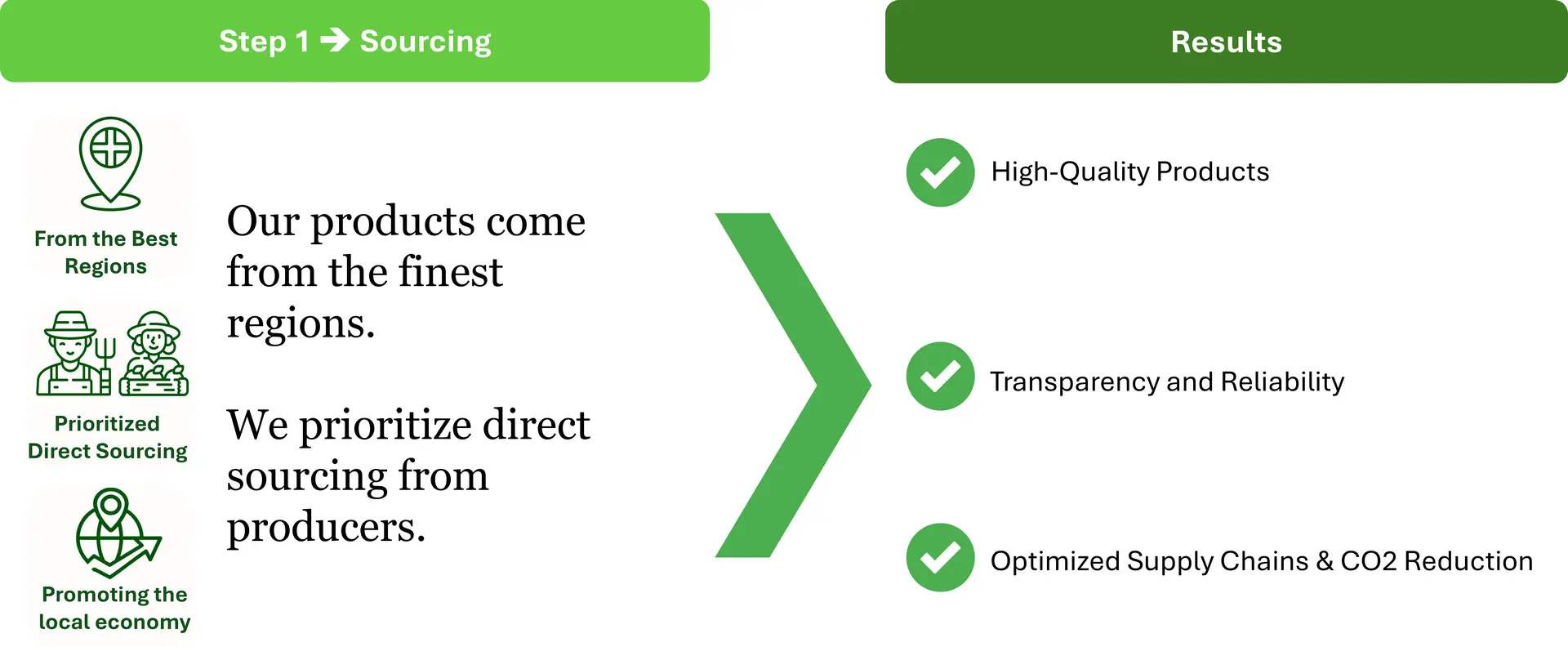
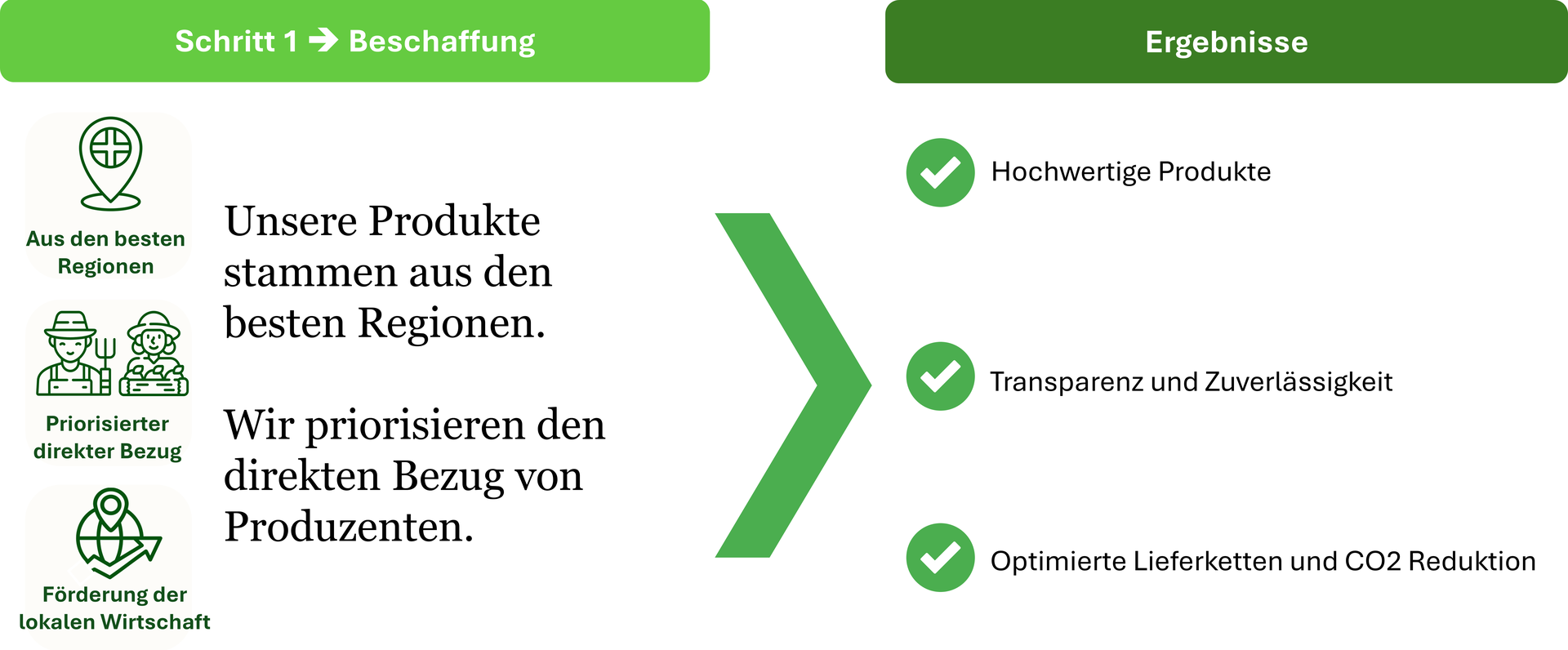
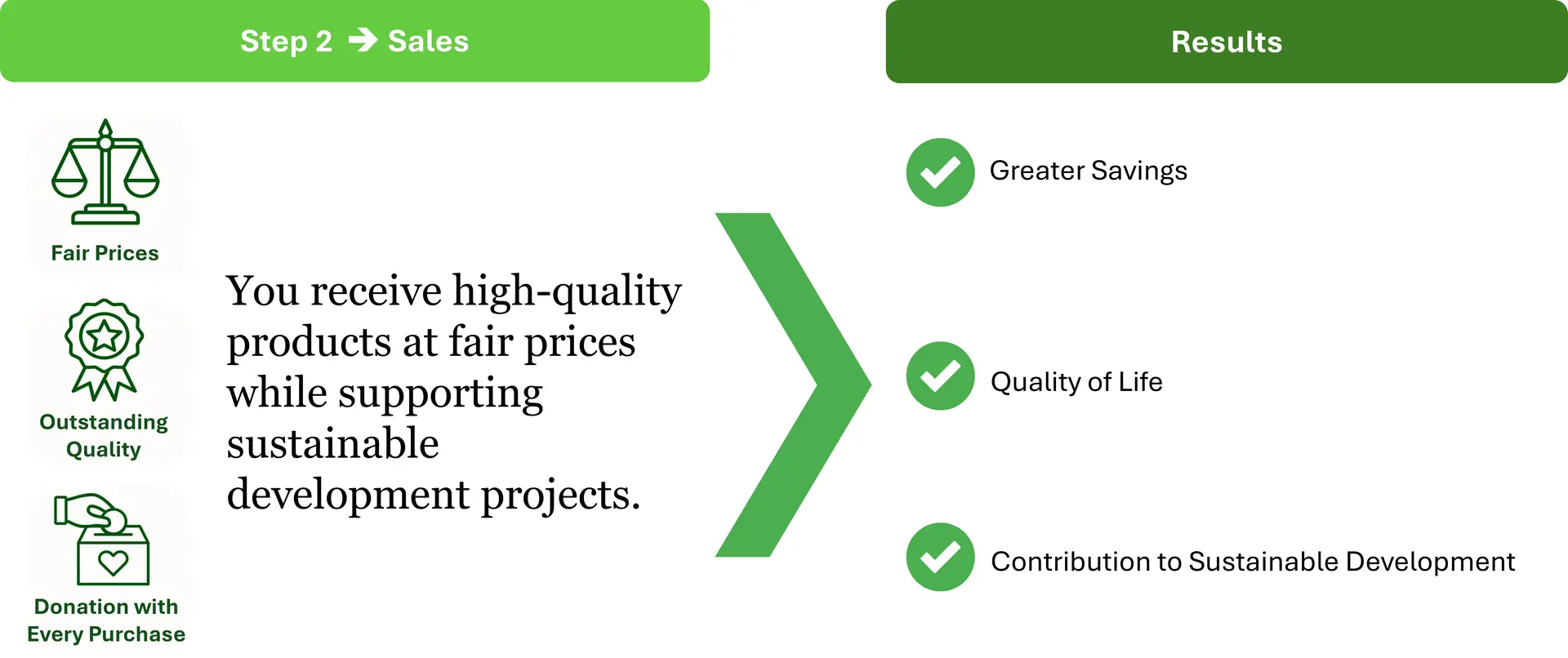
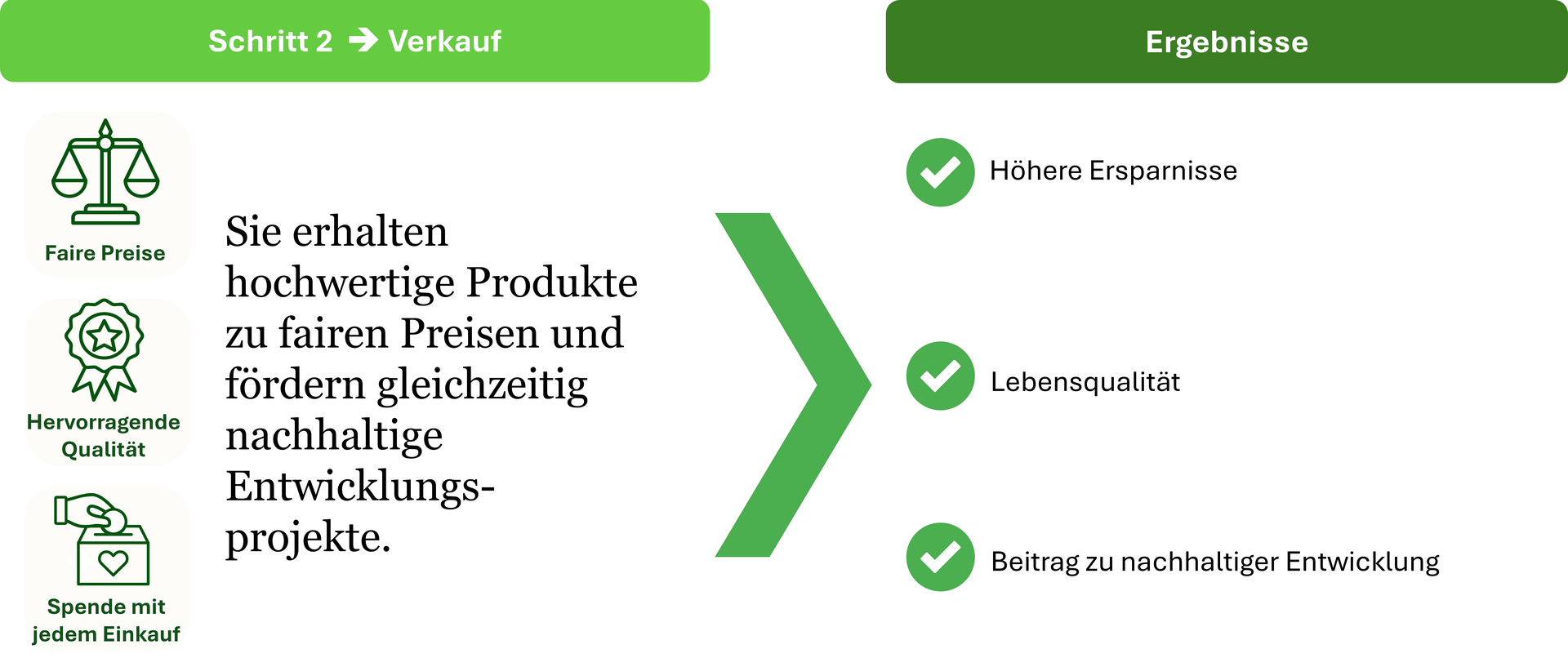
We are an e-commerce company specializing in high-quality consumer products for both B2B and B2C customers. Company 4 Humanity prioritizes direct sourcing from sustainable producers, ensuring that customers receive premium products at fair prices, while producers and farmers retain maximum value without losing margins across the value chain.
Our mission is to offer customers high-quality products at fair prices, generate sustainable and fair returns for our shareholders, and contribute to a future free from poverty, forced migration, illiteracy, and conflict.
We firmly believe we need substantial change on global level to ensure a truly civilized world. Currently every hour approximately 600 children die from malnutrition and preventable diseases, 2.2 billion people do not have access to clean water and in 2024 around 120 million people were forced into migration.
The good news is that only 0.5% of global company revenues would be sufficient to structurally close the funding gap for achieving the Sustainable Development Goals (SDGs) by 2050. These goals include, among others, ending hunger and poverty, tackling climate change and forced migration, protecting the environment, and ensuring a life of dignity for every human being.
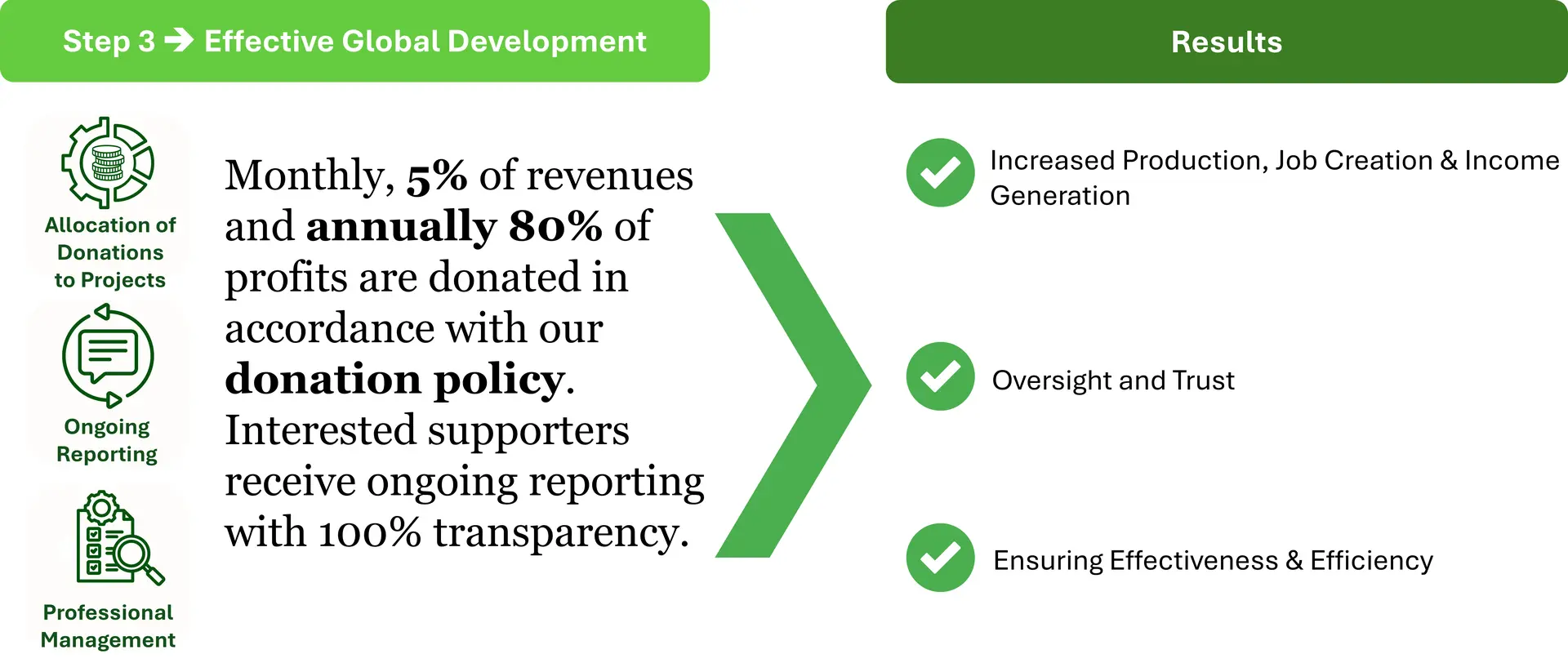
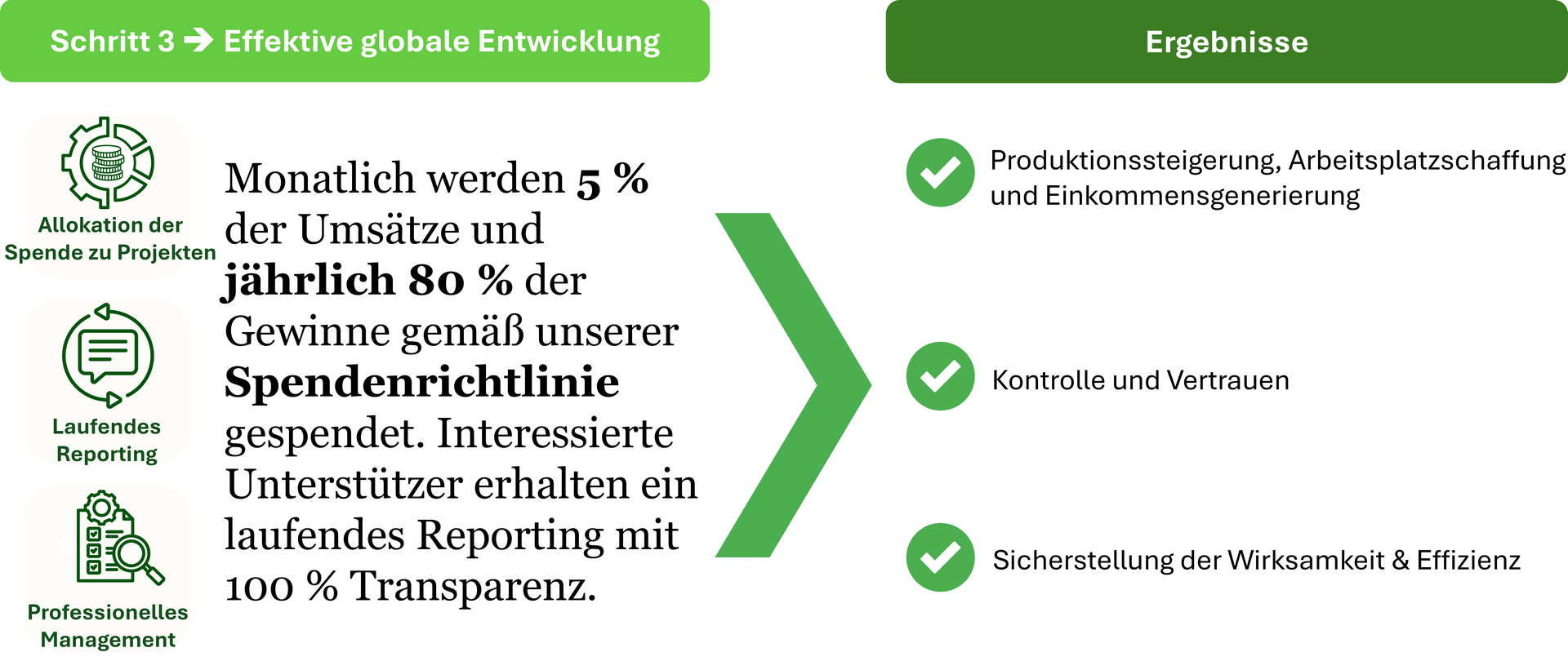
5% of our sales revenue goes into economically self-sustaining development projects.
0.5% of global company revenues would be sufficient to structurally close the funding gap for ending hunger, poverty, climate change and forced migration by 2050.
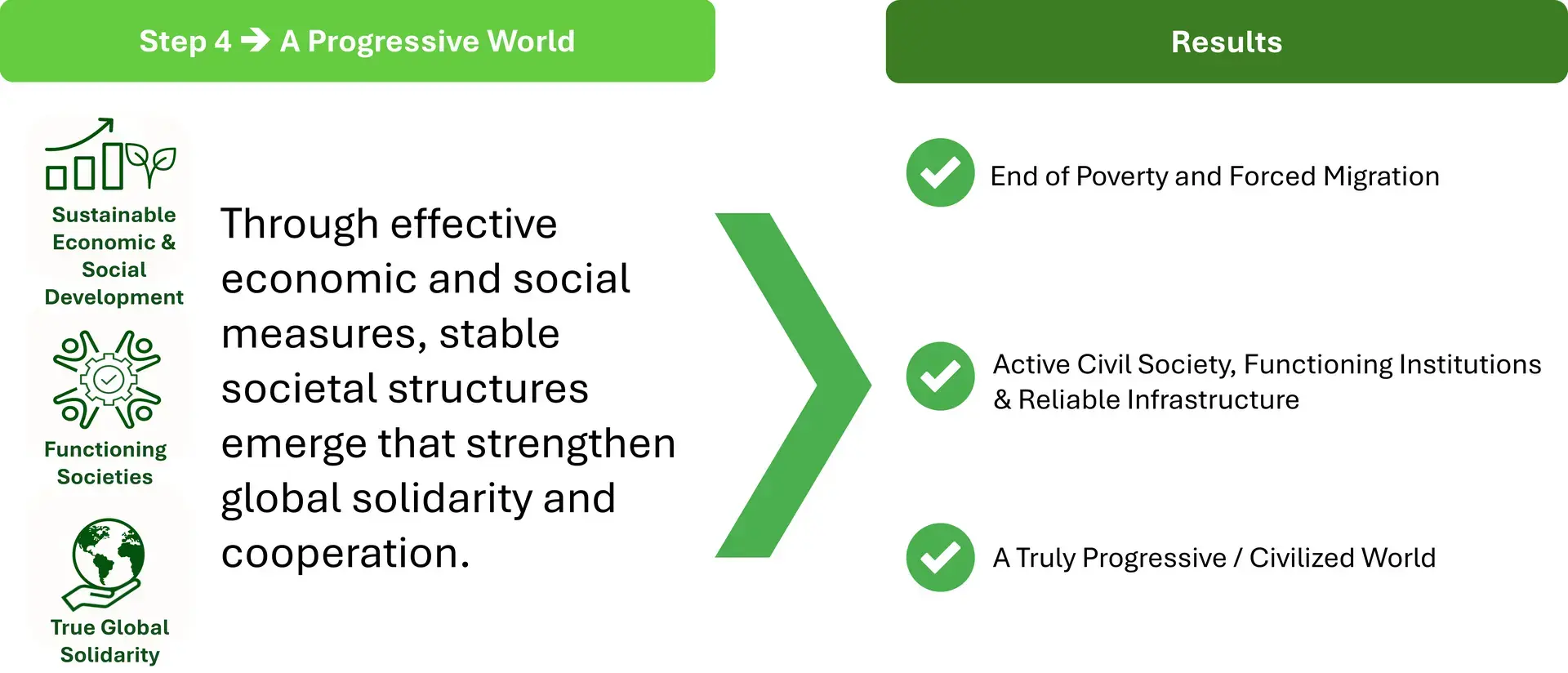
Discover how our business model shapes a progressive world in following four steps.
Sourcing
Effective Global Development
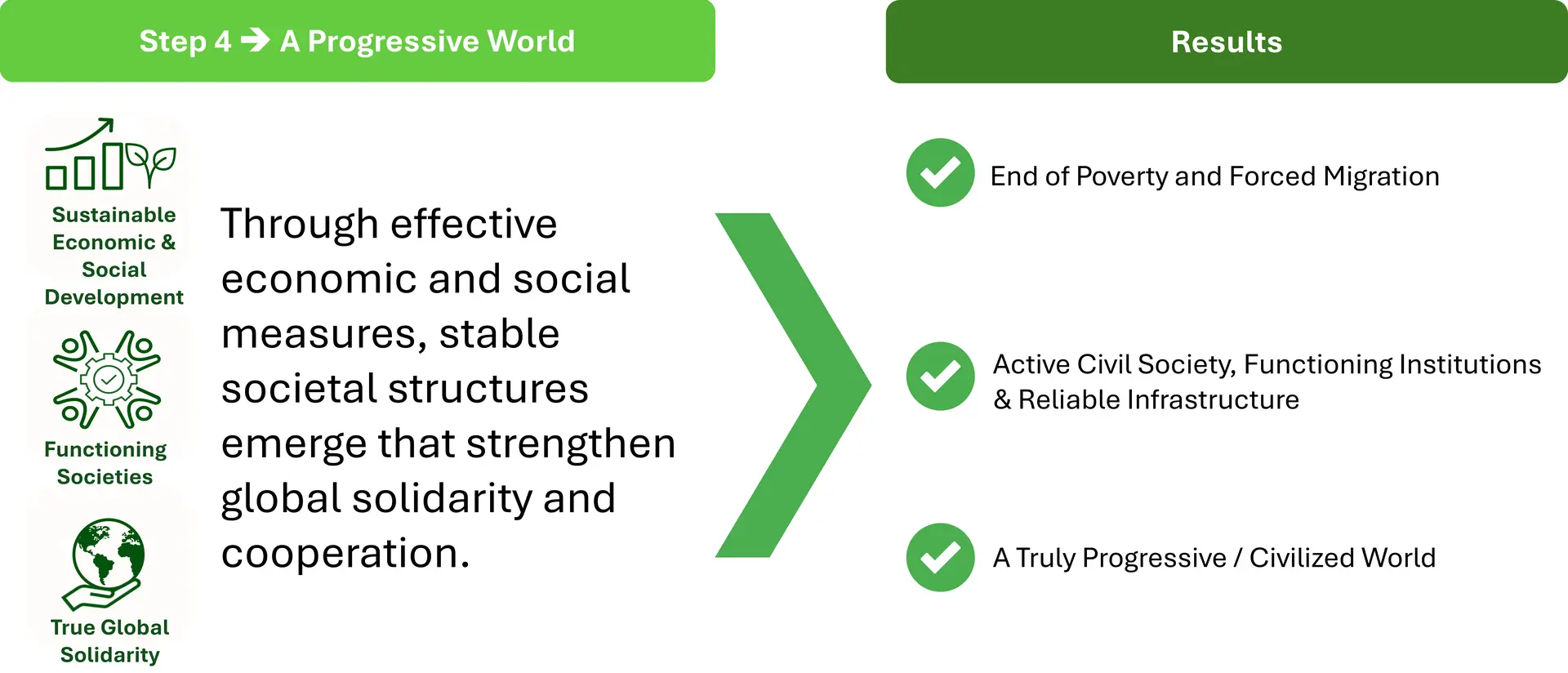
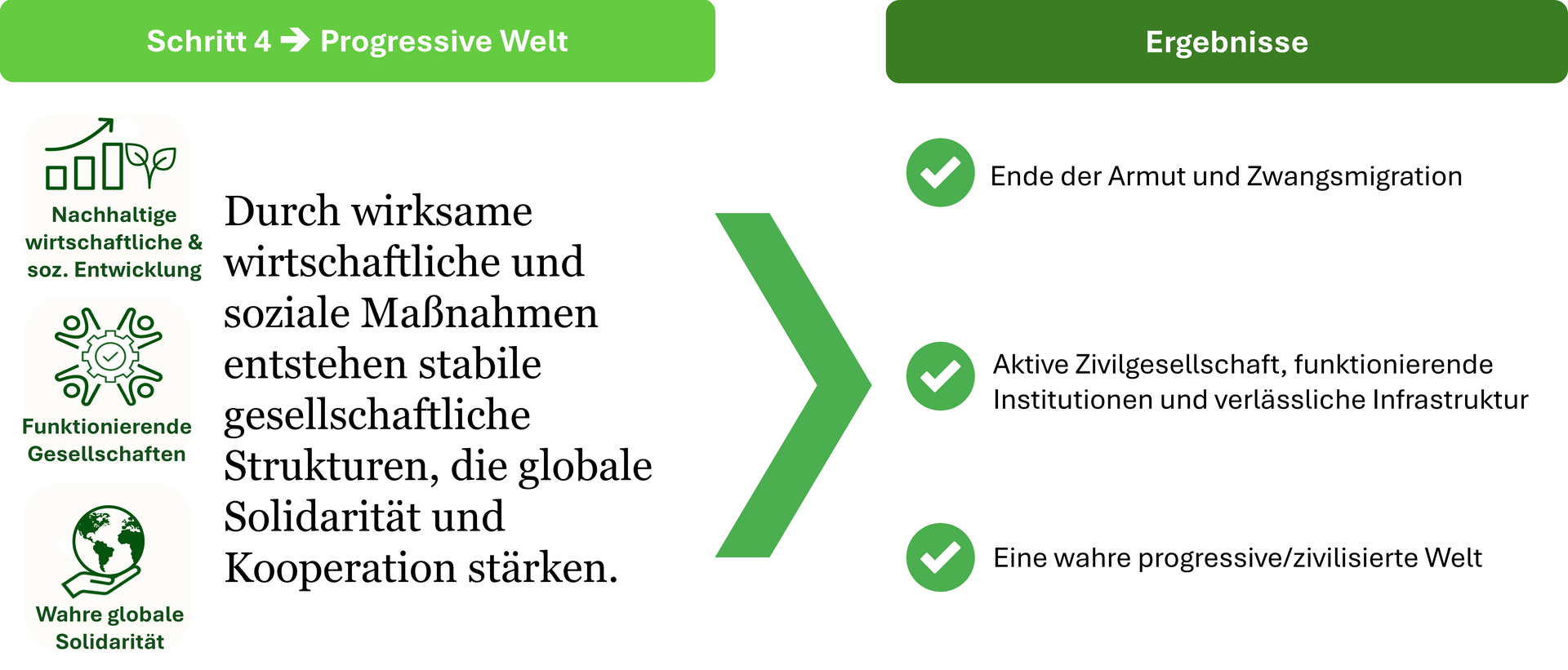
A Progressive World
Sales



The Company 4 Humanity song.
Have a listen.
Frequently Asked Questions
All products are carefully reviewed by us, and through regular quality checks, we ensure they consistently meet first-class standards before being delivered to our customers.
As a company, we have committed to allocating at least 5% of our sales and 80% of our free cash flow (the money that remains after all expenses, repayments and necessary investments) to sustainable development projects. The 5% contribution is credited towards the 80%.
With allocation of only 1% of the global revenues of all companies over a period of 25 years, the f inancing needs to achieve Sustainable Development Goals (SDGs) can be covered. These goals include, among others, the eradication of poverty, the protection of the environment, promotion of peace and justice, and ensuring a life of dignity for every human being.
By partnering closely with targeted communities and reinvesting the proceeds of these projects into social progress, we enable self-reinforcing, indigenous growth. This model strengthens local economies and societies, increases resilience, and ensures sustainable development for a world we can be proud of.
Effective management of these projects is ensured through a structured and strategic approach. This includes thorough needs assessments, data-driven and impact-oriented planning, and the design of customized projects tailored to specific community contexts. Additionally, projects are supported by community-based governance structures, continuous monitoring, and strong operational oversight to ensure accountability, efficiency, and long-term sustainability.